
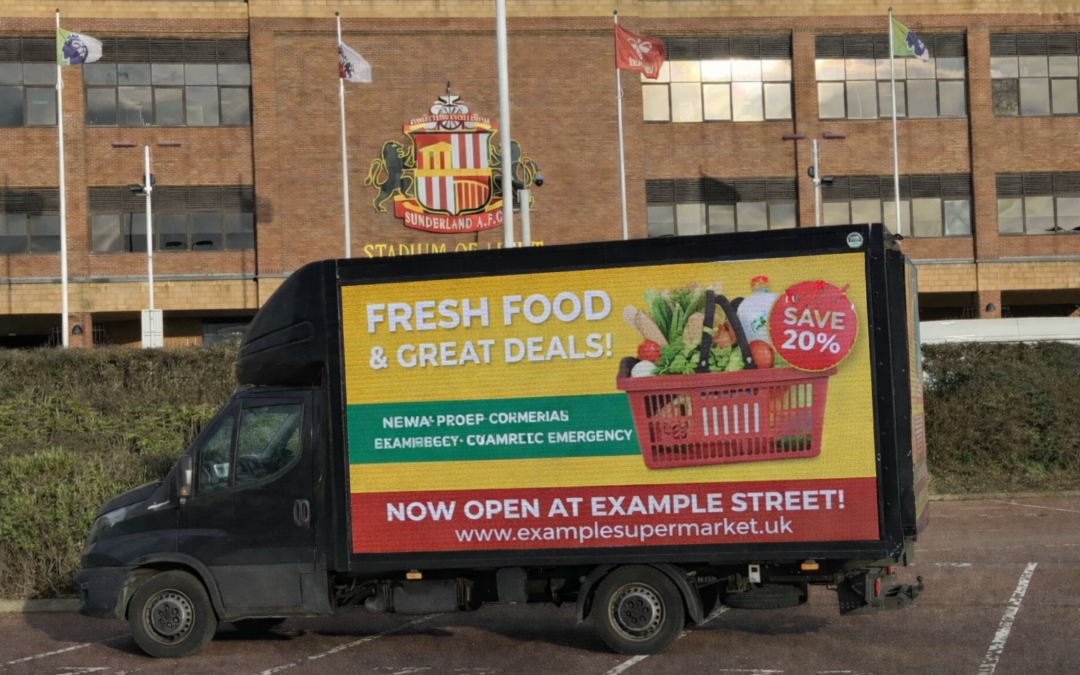
In today’s crowded marketing landscape, promoting an event in the UK takes more than a few social media posts and a listing on an events website. Whether you’re organising a music festival in Manchester, a business expo in Birmingham, or a food fair in Brighton, cutting through the noise is essential. That’s where mobile billboards come into their own. Eye-catching, flexible and highly targeted, mobile billboard advertising is becoming an increasingly popular way to boost event attendance across the country.
High Visibility in High-Footfall Areas
One of the biggest advantages of mobile billboards is their ability to reach your audience directly. Unlike traditional static billboards, which remain fixed in one location, mobile billboards travel through busy city centres, retail parks, transport hubs and residential areas.
Imagine your event advert circulating around Oxford Street in London during peak shopping hours or driving through student-heavy areas near university campuses in Leeds. This kind of exposure ensures your message reaches thousands of potential attendees in a single day. The vehicle’s movement naturally draws attention, making people far more likely to notice your event promotion than a static roadside poster.
Targeted Route Planning
Mobile billboard campaigns can be strategically planned to maximise relevance. If you’re promoting a family-friendly summer festival, you might target parks, shopping centres and school zones during pick-up times. If it’s a corporate networking event, routes through business districts in Canary Wharf or central Edinburgh would make far more sense.
This flexibility allows event organisers to tailor their campaign around their specific audience demographics. You’re not simply hoping the right people pass by; you’re deliberately placing your advert in front of them. In the UK’s diverse and regionally distinct cities, this level of targeting can make a significant difference to attendance numbers.
Building Local Buzz
Events thrive on anticipation. The more people see and hear about an event, the more likely they are to talk about it. Mobile billboards help create that buzz by repeatedly exposing local communities to your message.
For example, if your event is taking place in Bristol, having a mobile billboard circulating the city for a week prior to the event builds familiarity. By the time the event date approaches, residents have likely seen the advert multiple times. This repeated exposure reinforces the event details in their minds, increasing the chances they’ll attend.
The physical presence of a branded vehicle also adds a sense of scale and legitimacy. A large, professionally designed billboard truck signals that your event is significant and well-organised, which can influence people’s decision to buy tickets.
Supporting Digital Marketing Efforts
Mobile billboards don’t replace digital marketing – they enhance it. Including a clear website URL, QR code, or social media handle on your design bridges the gap between offline and online engagement.
In the UK, smartphone usage is widespread, so it’s common for passers-by to quickly search for an event they’ve just seen advertised. A compelling call to action, such as “Book Now”, “Scan for Tickets”, or “Early Bird Ends Soon”, encourages immediate action. When combined with geo-targeted social media ads in the same areas, mobile billboards reinforce your messaging across multiple touchpoints.
This integrated approach strengthens brand recall and improves overall campaign effectiveness.
Reaching Audiences Beyond Social Media
While social media platforms are powerful, not everyone engages with event promotions online. Algorithms can limit visibility, and paid ads don’t always reach every segment of your target market.
Mobile billboards help you reach people who may not be actively searching for events online. Commuters, shoppers, tourists and families out for the day are all exposed to your message organically. In busy UK cities where people spend significant time travelling or walking, this physical visibility can be incredibly valuable.
It also ensures your event is visible to older demographics who may be less active on platforms like Instagram or TikTok but are still keen to attend local exhibitions, markets or performances.
Flexible and Time-Sensitive Promotion
Event marketing often involves tight timelines. Perhaps ticket sales are slower than expected, or you want to promote a last-minute headliner announcement. Mobile billboard campaigns can be launched relatively quickly and adjusted as needed.
You can increase coverage in the final days before your event, focus on specific neighbourhoods where ticket sales are lower, or run promotional vehicles during key times such as weekends or rush hour. This agility allows organisers to respond to real-time demand, something traditional print advertising cannot.
Memorable and Shareable Impact
In an age where experiences are shared online, visually striking mobile billboards can even become part of the social conversation. A creatively designed vehicle driving through central Glasgow or Liverpool can prompt photos, shares and organic mentions on social media.
The novelty factor of a moving, large-format advert adds an element of excitement. For certain types of events – such as music festivals, cultural celebrations or sporting occasions – mobile billboards can contribute to the city’s overall atmosphere, building anticipation and encouraging participation.
Cost-Effective Exposure
Compared to large-scale TV campaigns or extensive print runs, mobile billboard advertising can be surprisingly cost-effective. You gain repeated exposure across multiple high-traffic locations without paying for numerous static billboard placements.
For local UK events with limited marketing budgets, this concentrated yet wide-reaching visibility offers a strong return on investment. When strategically planned, even a short campaign can generate significant awareness and drive ticket sales.
